Saturday, September 24, 2016
Trailside Museum on Sunday
Join the Frontier Guard at the Trailside Museum in Mountainside on Sunday!

Thursday, September 15, 2016
The Coinage of Colonial America


The reverse of the coin, with the crown-and-roses design of possessions England claimed - England, Scotland, Ireland, and France (yes, English monarchs claimed to rule France until 1801).
Coinage was scarce in colonial America. Many colonies in the seventeenth century even accepted quahog wampum as currency, at a rate as high as 2 to the pence for the lustrous purple ones in the early 17th century. This practice died out by the 18th century, however, as copper coinage and paper currency became more widespread. Hard money remained scarce, nonetheless, and the value of colonial paper issues fluctuated with a colony's solvency and the distance from the place of issue.
Coins of several European countries circulated throughout the colonies as well - British, French, Spanish, and Dutch in particular. Values were fixed by colonial legislatures, often at different rates, but the real value was generally based on weight and purity of the metal and was subject to negotiation between buyer and seller.
The University of Notre Dame has a great website for colonial coinage and currency, for those who are interested, with overviews and illustrations of coins and currency from most colonies, as well as European coins that circulated.
See: Colonial Currency at Notre Dame
See: The Coins of Colonial and Early America at Notre Dame
Oh, and why is the silver shilling marked "LIMA"? In 1743, at the height of the War of the Austrtian Succession, or King George's War, as it was known in the American Colonies, a British fleet under Admiral Anson captured the entire Spanish treasure fleet from New Spain and Peru. Much of the British silver coinage of 1745 and 1746 was minted using this silver, and to mark its origin, and probably as an "in your face" taunt, the British Crown had these coins stamped "LIMA" in commemoration.
Sunday, August 14, 2016
Roasting Ears of Corn, Anyone?
The Frontier Guard's next event is the Roasting Ears of Corn Festival at the Museum of Indian Culture in Allentown, PA, August 20 & 21.
This is a big event with scores of tribal dancers, dozens of vendors, and a multitude of displays. For more details, see the website at Museum of Indian Culture.
This is a big event with scores of tribal dancers, dozens of vendors, and a multitude of displays. For more details, see the website at Museum of Indian Culture.
Monday, August 8, 2016
Muster Roll of the NJ Provincial Frontier Guard, 1757
Here is a copy of the muster roll of the Frontier Guard for one month during the French & Indian War. This is a valuable snapshot of the unit's membership, but on the other hand, as men enlisted for a month at a time, the roster most likely changed considerably, so what you see here may or may not reflect the membership in other months:
Muster Roll of the Provincial Forces Commanded by Capt. Richard Gardiner on the Frontiers of New Jersey from the 8th of June to the 20th day of July 1757
Name
Gardiner, Richard (Captain) .
Wood, John (Lieutenant)
Rickey, John (Lieutenant)
Stull, John (Lieutenant)
Butler, Samuel (Sergeant)
Barton, Joseph (Sgt/Crp?)
Chamberlain, Benjamin (Sgt/Crp?)
Cole, Henry (Sgt/Crp?)
Cooper, Henry (Sgt/Crp?)
Freeman, Gilman (Sgt/Crp?)
Haddon, James (Sgt/Crp?) also sp. (Haddin/Headen)
Hysom, Thomas (Sgt/Crp?)
Ludlum, Creed (Sgt/Crp?)
Malone, Richard (Sgt/Crp?)
Munson, John (Sgt/Crp?)
Pierce, Lewis (Sgt/Crp?)
Riggs, Reuben (Sgt/Crp?)
Terratt, Daniel (Sgt/Crp?)
Vroom, Jacob (Sgt/Crp?)
Abbot (Abbit/Abbet), James
Adams, Alexander
Avery, Alexander
Benham, Absalom
Bennett, Henry
Bonum, Hezekiah
Brink, Nicholas
Brooks, Isaac
Brown, Daniel
Bruse, Alexander
Bush, Anthony
Chambers, Samuel
Chestney (Chesnut/Chester) , Joseph
Clark, James
Cole, Abraham
Colt, Abraham
Cooper, Constant
Davis, Daniel
Davis, James
Davis, John
Decker, Hermanus (var) . .
Depuy, Daniel . .
Devoir (Devoor), Jacob . .
Devoir (Devoor), John . .
Doty, John
Doty, Micajah
Erwin, Luke
Everfelt, Martin
Falore, Philip
Ferguson, Thomas
Fish, Nath'l
FitzWater (Fitchwater), Wm
Grimes, Adam . .
Hailstiles (Hailstril), Peter . .
Hair, Philip . .
Hanson (Hansen), Henry (Hans) . .
Holloway, Elkanah
Hopkins, Ephraim
Hughes, Thomas . .
Hull, John
Johnston (Johnson), Wm .
Johnston, Edward
Johnston, James
Kennedy (Kannady), Charles
Killam (Killham), Gilbert
Mahurin, Othniel (Otho) .
Man (Mann), George
Marshall, Peter
McLaughlin, Patrick . .
McNeil, James
Mead, Stephen . .
Middah (Medah, Meddah), Ephraim . .
Middah (Medah, Meddah), Peter . .
Miller, Christeon . .
Miller, Wm
Mordan, George . .
Morden (Mordan), Ralph
More, George . .
Myres (Miers), Bastian (Boston)
Nearpass (Norpus), Jacob
Nightingale, Wm . .
Oppie (Oppy, Oppoy), Edward
Pennington (Penneton), Jonathan
Pew, Hugh . .
Pool, William M
Preston (Prester), John . .
Quick, Thomas . .
Quick, Thomas Jr. . .
Randole, Edward . .
Ray (Rhea), Moses . .
Rosacrans, Daniel . .
Rosacrans, Jacob . .
Sergeant, David
Shick (Shack/Sheik), Adam
Skinner, Daniel
Skinner, Timothy
Smith, Abraham
Smith, Benj'n
Smith, Henry
Smith, John
Smith, Peter
Smith, Thomas
Stonehover, Cornelius
Swartwout (Swartout), Jacob
Swartwout (Swartwart), Benj'n . .
Tack, Isaac
Taylor, James
Vanclief (Vancleaf/Van Cleff), John .
Vangarder (Van Gordon), John . .
Vantyle (Vantuyle), Walter
Vantyle, Hermanus (Herman)
Walton, William (2)
Ward, Hermanus (var)
Wart, Henry
WestBrook, Abraham
Westcoat (Weascoat), Jonathan
Whitehead, Isaac . .
Wintermute (Windemoot), Leonard
Wood, David M .
Wood, Jacob . .
Young, Angle (Angel) H "d. Sept. 7"
Beaded Choker
A fellow reenactor asked if I could make him a beaded choker necklace for his impression, so here is the result. It's about 12" of #6 glass pony beads tacked onto a deerskin backing. I'm happy with how it came out, so I thought I'd show it off...


Thursday, August 4, 2016
Handmade shoes
The week before the Gunmakers' Fair, I stopped in at Dixon's (my wife is very understanding), and I found a pair of shoes in my size made by Greg Geiger. In a coincidence, I had just run across a copy of The Book of Buckskinning: Volume 3 in a second-hand store, and in the 1984 book, there was an article on footwear by Greg Geiger.
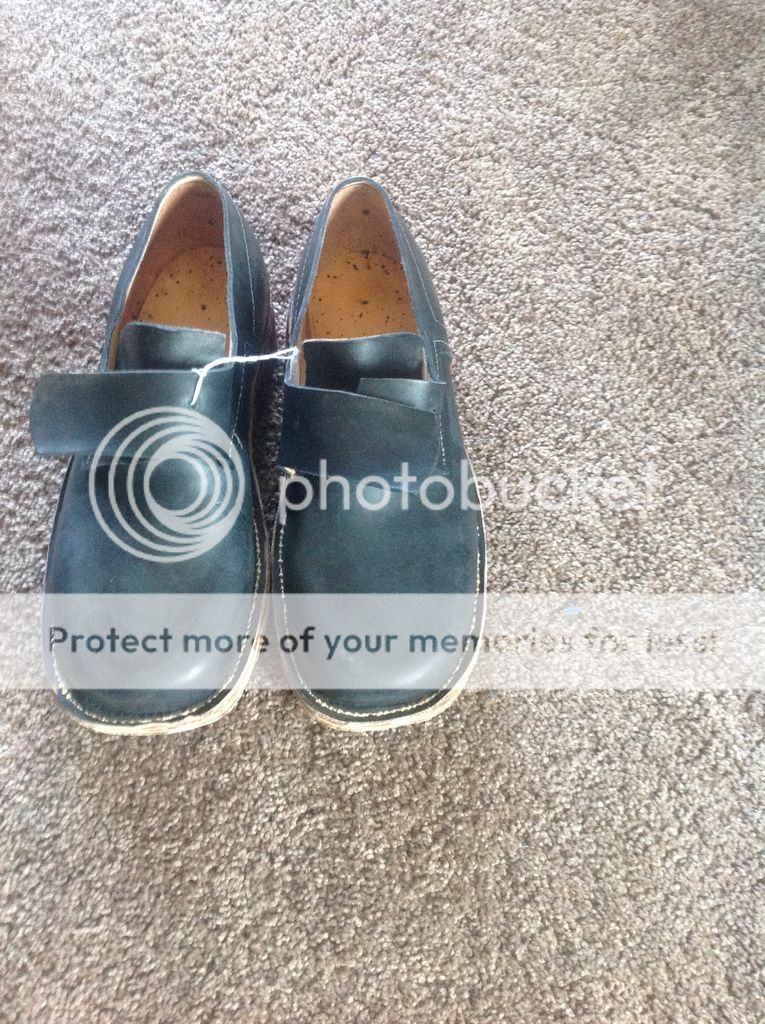
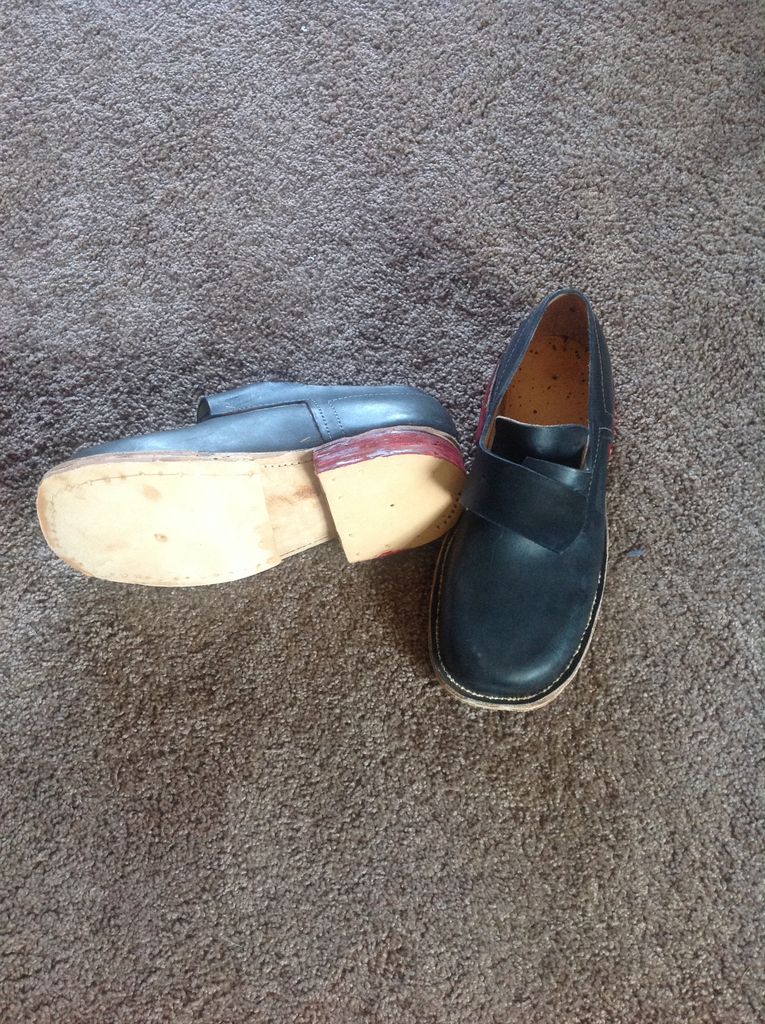
These are great shoes! I have wide feet, and these shoes are built wide enough for my EEE or EEEE feet. The price was also a surprise - less than a pair of Fugawees.
I have yet to grease these up, install buckles, and wear them, but I am looking forward to doing so.
By the way, red heels were a fashion started by Louis XIV of France, and during the eighteenth century, any man who wanted to look like he could appear at court - as opposed to before a court - painted his shoe heels red (nothing like royalty to set fashion trends).
By the way, red heels were a fashion started by Louis XIV of France, and during the eighteenth century, any man who wanted to look like he could appear at court - as opposed to before a court - painted his shoe heels red (nothing like royalty to set fashion trends).
Thursday, July 28, 2016
Finished Horn
Here it is with a beaded horn strap and stand...

I entered it at Dixon's Gunmakers' Fair. It didn't win any ribbons,but it got a lot of nice comments and constructive critiques from the judges.


I entered it at Dixon's Gunmakers' Fair. It didn't win any ribbons,but it got a lot of nice comments and constructive critiques from the judges.


Wednesday, July 27, 2016
Just About Done....
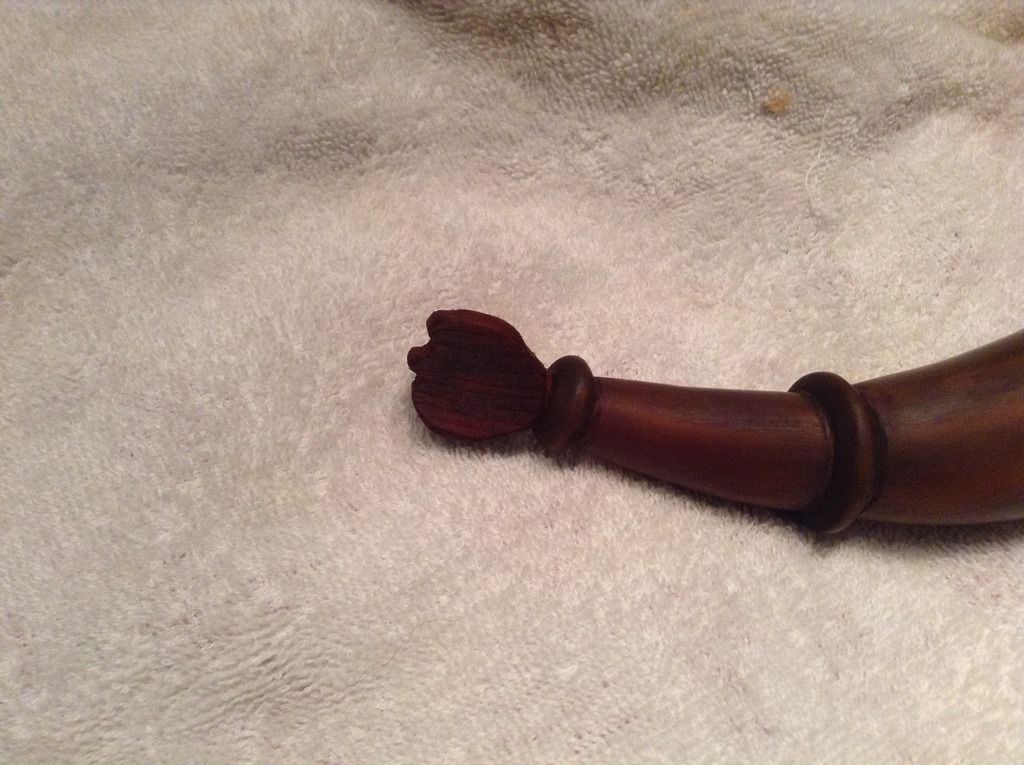
The horn is just about done; all I have to do now is put in a staple on the plug.
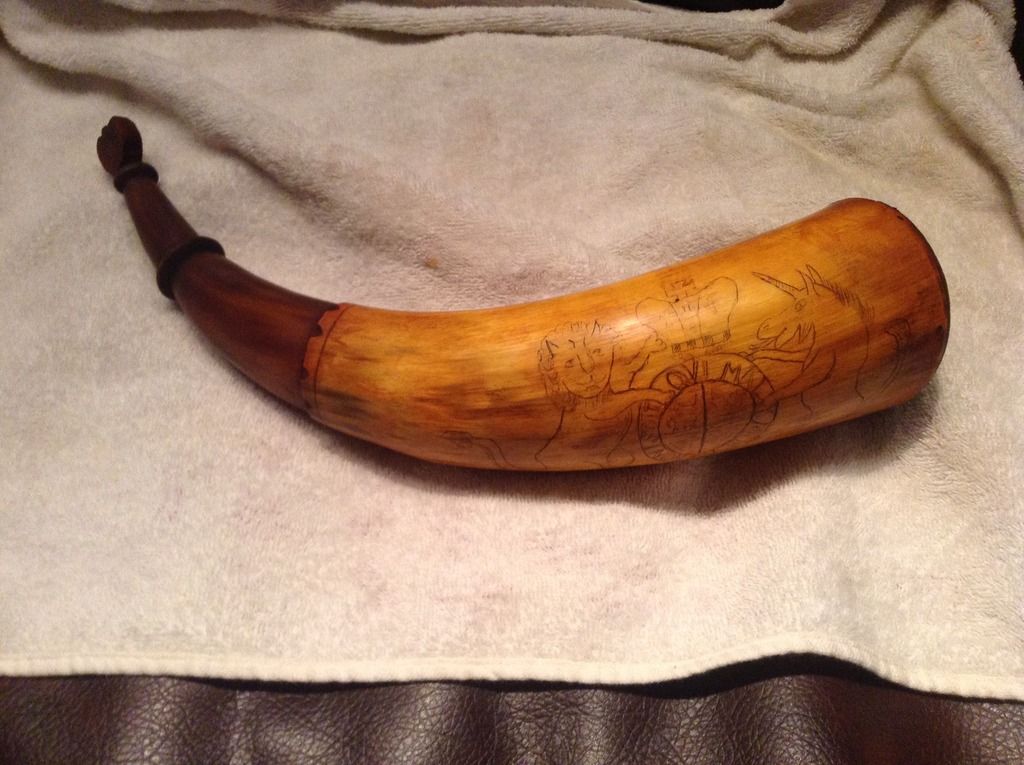
I didn't have a lathe available to turn a plug, so I went with a slightly domed plug.
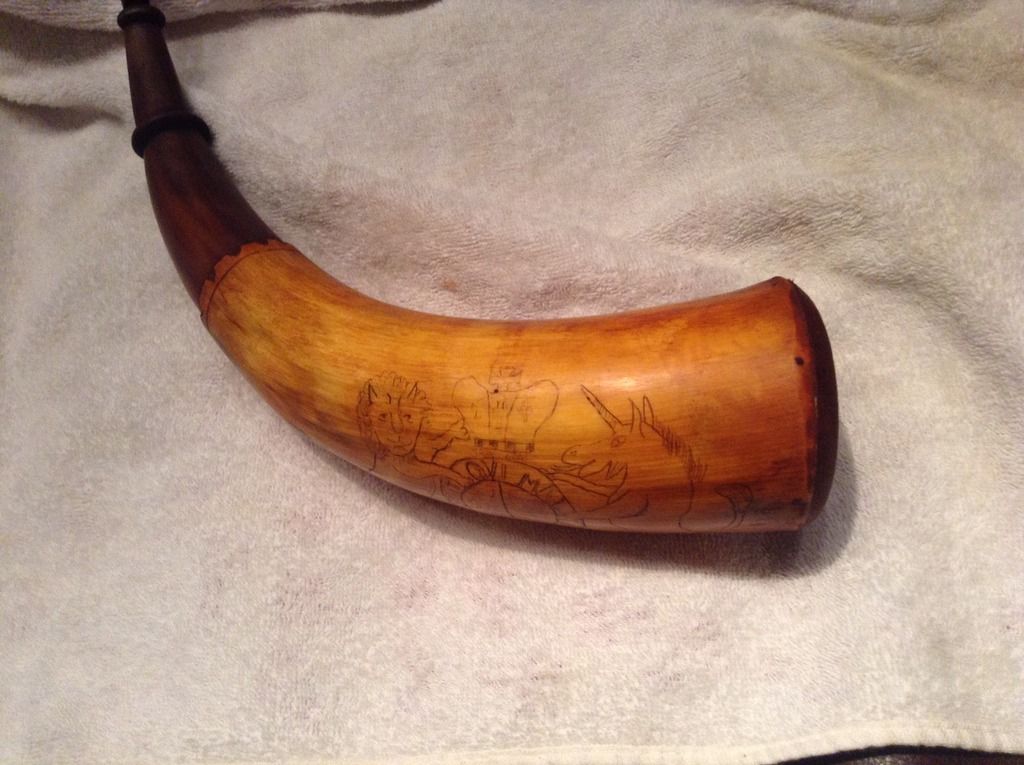
The scrimshaw came out decently well. I'm a relative novice at scrimshaw, so I'm sure I made a number of mistakes, but on the whole, I'm fairly happy with the look.
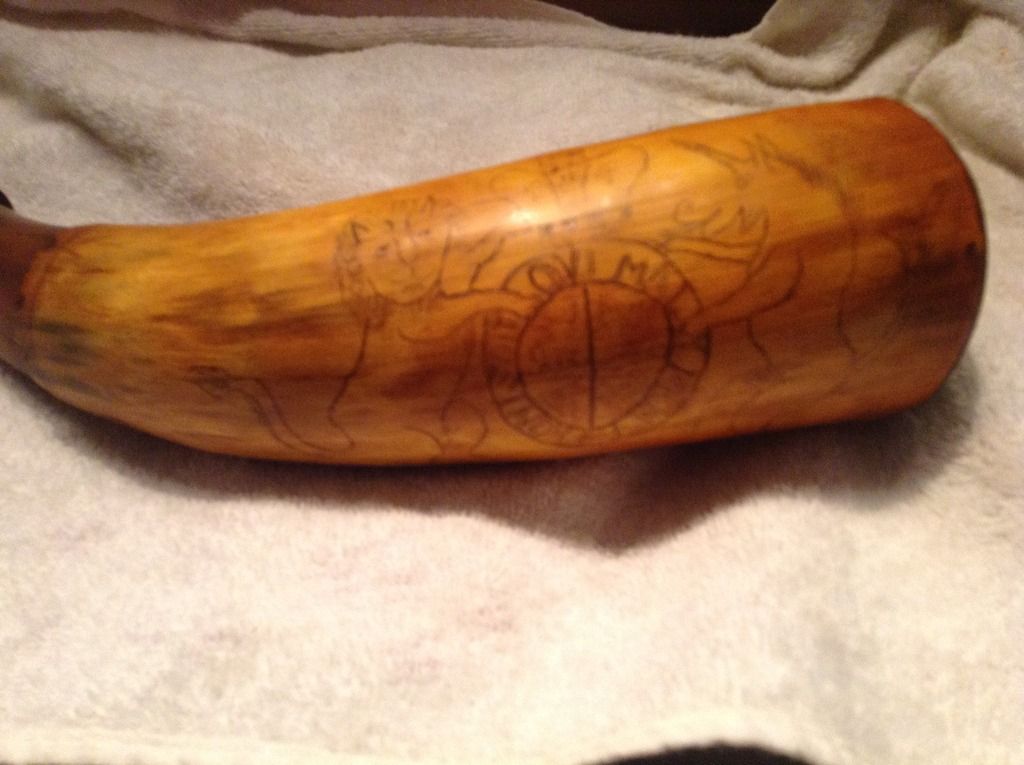
I had a great acorn spout plug that my friend Gus Tabor made for me, but I wanted everything about this horn to be mine, so I filed myself a crown-shaped plug to echo the crown on the coat of arms.
Comments and honest critiques are welcome. Let me know the good, the bad, and the ugly.
I didn't have a lathe available to turn a plug, so I went with a slightly domed plug.
Sunday, July 17, 2016
Easton Heritage Day 2016
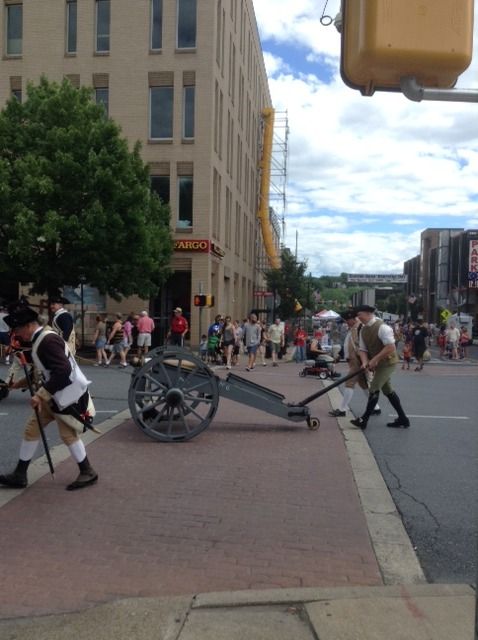
On July 10, the Frontier Guard returned to Easton, PA, site of the 1758 treaty that established peace with the Lenape under Teedyuskung. As usual, we had a large display, right in the center of Founder's Square.
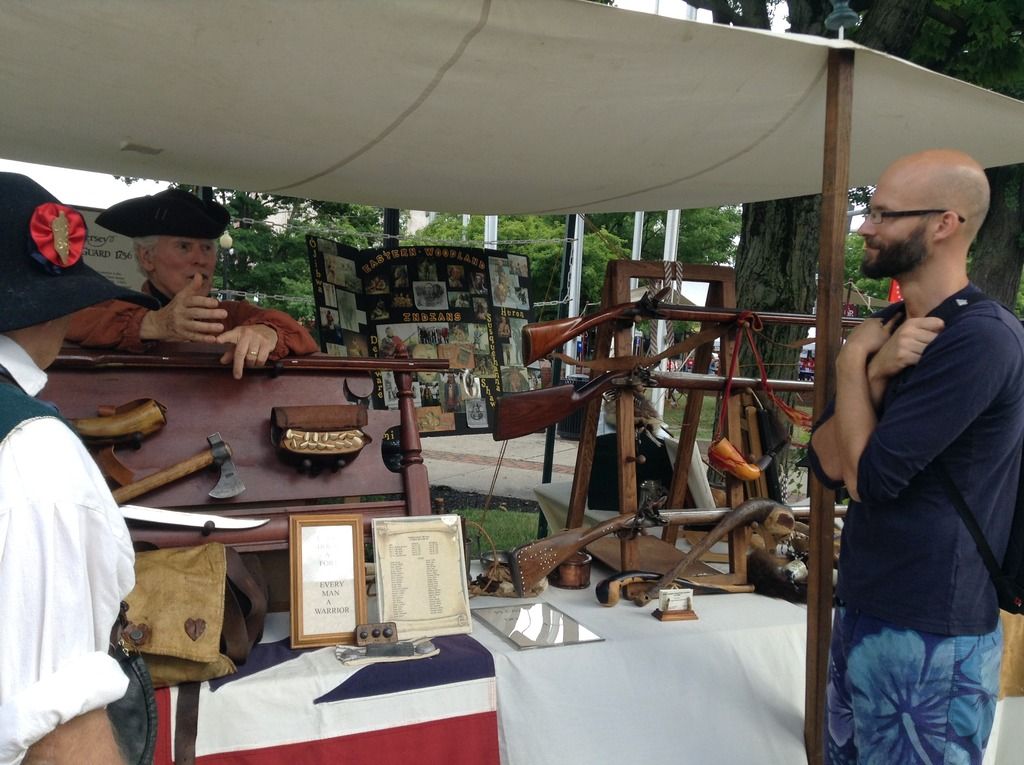

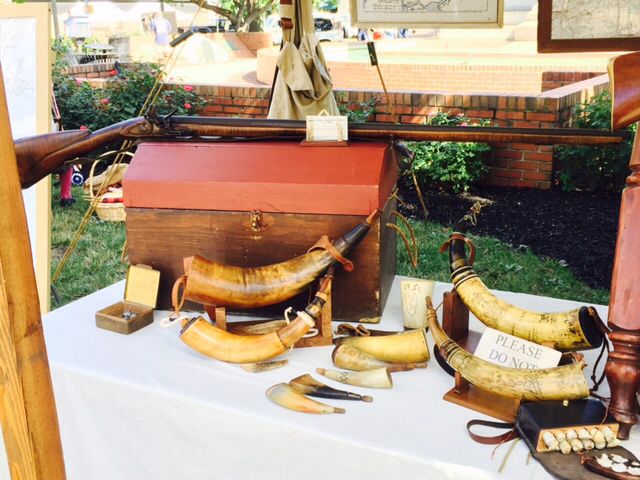


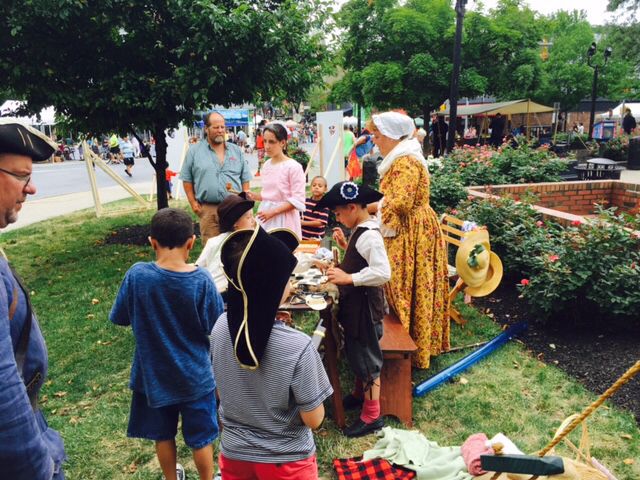
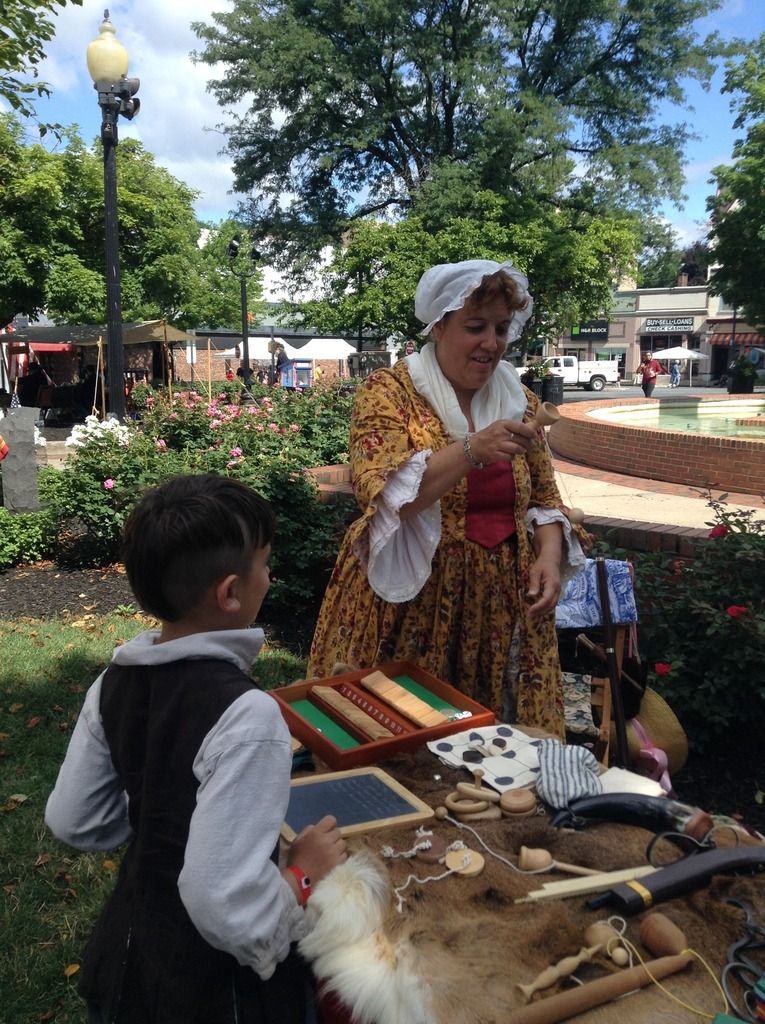


Our junior members also set up a full display of children's toys and games.


Liz also joined us, looking lovely, as usual.
There was a large crowd at the event, and many different reenacting groups, representing a broad spectrum of American history. Town criers read the Declaration of Independence- from 20 years after our time period- and there were crafters, historical tradesmen, and vendors galore. It was a long day, but rewarding.

Saturday, July 9, 2016
Easton Heritage Day July 10th
Come join us - and a large throng of other reenactors, crafters, and history-related displays and pageants, at Easton's Heritage Day Celebration on July 10, 2016: http://heritageday.org/
This is a big event, and the weather is supposed to be near-perfect. The festivities kick off around 10:00AM and run until evening, with a concert and fireworks.
While the event commemorates the first reading of the Declaration of Independence in Easton in 1776, for the purposes of the Frontier Guard, Easton was significantly the site of the Treaty of Easton, 1758, which by and large brought peace between the Lenape and the British colonists in Pennsylvania and New Jersey. The original treaty is on display in the Sigal Museum, which will be open during Heritage Day. Don't miss it.
Subscribe to:
Posts (Atom)